Cultural Insights
The Spirit of
Seasonal Japan
Japan's profound relationship with the natural world shapes its art, food, festivals, and daily life. Understanding this cultural depth transforms a trip into a truly meaningful journey.
Core Concept
Mono no Aware —
The Pathos of Things
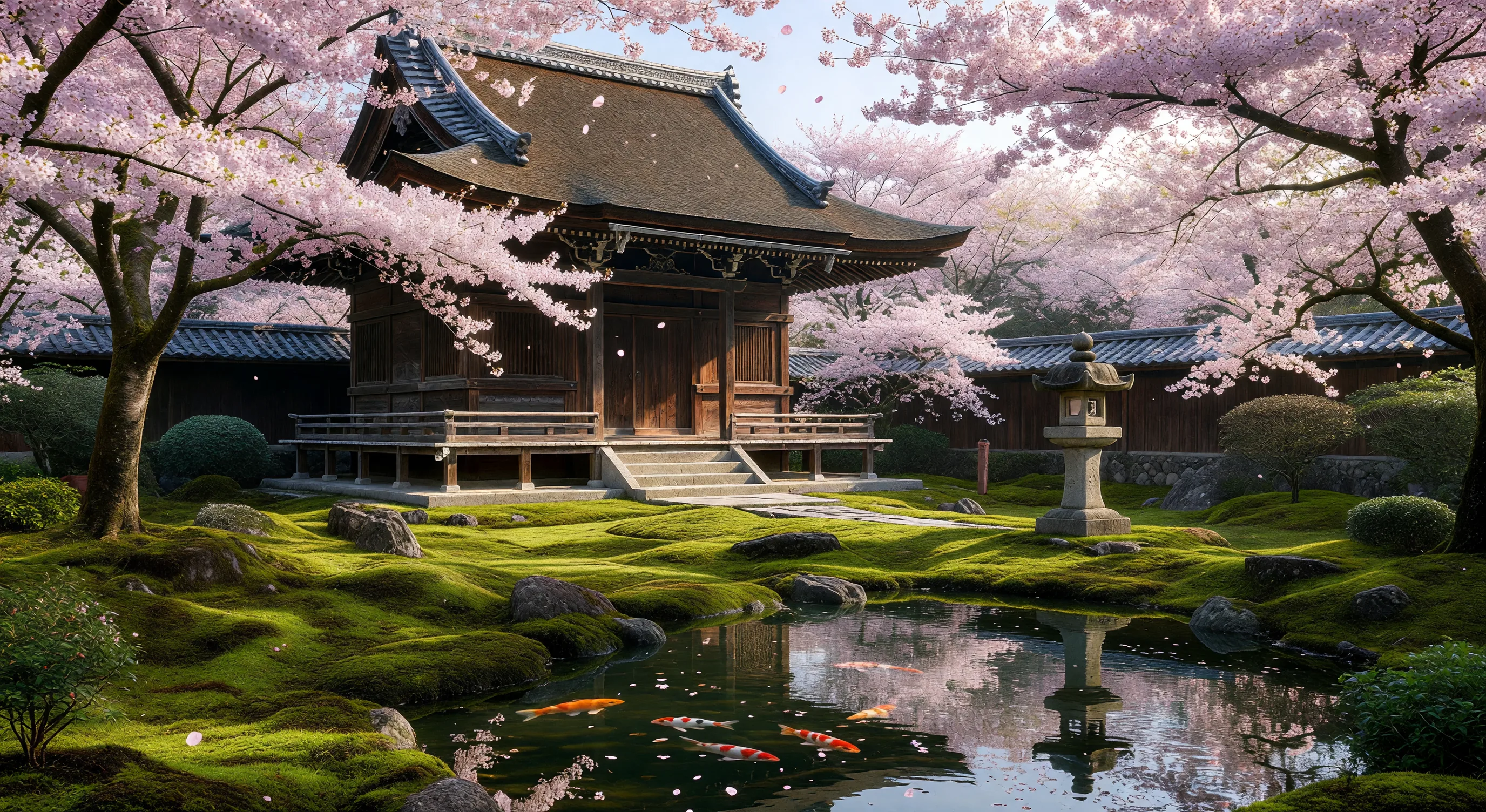
At the heart of Japan's seasonal culture lies the concept of mono no aware — a bittersweet awareness of the impermanence of all things. It is why cherry blossoms are cherished more for their brief fall than their full bloom, and why autumn leaves gain emotional weight precisely because they will soon be gone.
This sensitivity to transience permeates Japanese aesthetics, poetry, art, and architecture. The gardens of Kyoto are designed to be beautiful in every season but perfect in none — always something gained, always something passing.
"It is not only that the cherry blossoms are beautiful — it is that they fall."
— Japanese proverb
Visitors who understand this philosophy find themselves experiencing Japan more deeply — pausing longer at the falling petal, the steaming bath, the bare winter branch — and leaving with something more than photographs.
Festivals
Japan's Major Seasonal Festivals
Japan's festival calendar is among the richest in the world. These matsuri connect communities to their history, nature, and the divine.
| Festival | Season | Location | Date (2026) | What to Expect |
|---|---|---|---|---|
| Hanami (Cherry Blossom Viewing) | Spring | Nationwide | Mar 25 – Apr 15 | Picnics under blooming trees; parks fill with food stalls and celebrations |
| Gion Matsuri | Summer | Kyoto | July 1–31 | UNESCO-listed festival with spectacular float processions on July 17 & 24 |
| Tanabata | Summer | Sendai & nationwide | July 7 (Aug 7 in Sendai) | Star Festival — streets decorated with colourful paper streamers and wishes |
| Awa Odori | Summer | Tokushima | Aug 12–15 | Japan's largest dance festival — 100,000 dancers fill the streets nightly |
| Obon | Summer | Nationwide | Mid August | Ancestral remembrance; lantern floating, bon odori dancing, cemetery visits |
| Koyo Viewing | Autumn | Nationwide | Sep 25 – Nov 30 | Contemplative walks through fiery-leaved temple gardens and mountain trails |
| Jidai Matsuri | Autumn | Kyoto | Oct 22 | Procession of 2,000 people in historical costumes spanning 1,200 years of Kyoto history |
| Hatsumode | Winter | Nationwide | Jan 1–3 | First shrine visit of the New Year — millions seek blessings for the year ahead |
| Sapporo Snow Festival | Winter | Sapporo | Feb 4–11 | Massive snow and ice sculptures fill Odori Park and Susukino in central Sapporo |
Etiquette
Cultural Do's & Don'ts
Shrine & Temple Visits
Purify hands at the temizuya (water basin) before entering. Bow slightly when passing under a torii gate. Photography inside temple halls may be restricted.
✓ Bow before the main hall✗ Talk loudly during ritualsDining Customs
Say "itadakimasu" before eating and "gochisousama deshita" when finished. Do not stick chopsticks upright in rice — this symbolises funerary offerings.
✓ Try seasonal set menus (teishoku)✗ Tip — it is considered rudeOnsen (Hot Spring) Baths
Wash your entire body before entering any communal bath. Remove all clothing — swimwear is not worn in traditional onsen. Tie long hair up.
✓ Relax and take your time✗ Take phones or cameras poolsidePublic Transport
Japan's trains and buses are silent sanctuaries. Keep voices low, phones on silent, and yield priority seats to the elderly and pregnant.
✓ Queue in marked lines✗ Eat or drink on local trainsHanami Etiquette
Arrive early to claim a picnic space under the trees. Take all rubbish home — many parks have no bins. Be respectful of others' spaces.
✓ Share food and conversation✗ Break or disturb cherry tree branchesWearing Kimono/Yukata
Renting seasonal traditional dress is actively welcomed as cultural appreciation. Wrap the left side over the right — the reverse is reserved for funeral attire.
✓ Ask for staff guidance on fitting✗ Wear in extreme weather without layersJapanese Aesthetics
Wabi-Sabi — Finding Beauty in Imperfection
Wabi-sabi is the Japanese art of finding beauty in imperfection, incompleteness, and the natural cycle of growth and decay. A cracked ceramic bowl repaired with gold (kintsugi), a weathered wooden temple gate, the asymmetry of a moss-covered stone path — these are wabi-sabi at its most eloquent.
In seasonal travel, wabi-sabi teaches us to cherish the one fallen cherry blossom in a pond, the single remaining maple leaf in November, the quiet of a snow-blanketed garden at dawn. The most profound Japan experiences often exist in silence and stillness.